Anion Gap Calculator: How to Calculate and Understand the Outcome
What exactly is the Anion Gap?
The anion gap is a measurement calculated from a standard blood test that assists clinicians check the balance of electrolytes in the body. It is taken from a routine serum chemistry or electrolyte panel and is used to support evaluation of acid-base balance. Although the term sounds highly specialized, the idea is straightforward: the result shows the difference between measured positively charged ions and measured negatively charged ions in the blood.
This difference matters because it can reveal the presence of unmeasured anions or unmeasured cations that are not obvious from a basic panel alone. In clinical practice, the anion gap serves as a diagnostic tool and a quick way to guide result analysis when an acid-base disorder or other metabolic disturbance is suspected.
An anion gap calculator makes this process easier by using common lab values to calculate the result in seconds. But the number only becomes useful when you know what it means in medical context. A normal result may be reassuring, while an abnormal one can point toward issues such as metabolic acidosis, low albumin, or other conditions that need further review.
Anion Gap Formula and Formula
The usual anion gap equation uses measured values from the blood, specifically serum sodium, serum chloride, and serum bicarbonate. The most widely used anion gap formula is:
Anion gap = Sodium − (Chloride + Bicarbonate)
Some clinicians use a variation that includes potassium, but most current tools use the simpler version above because it is broadly accepted and handy for routine interpretation.
Here is the core logic behind the equation:
- Sodium represents the principal measured cation.
- Chloride and bicarbonate represent the principal measured anions.
- The gap indicates the difference between measured positive and negative charges.
When you calculate the anion gap, you are not finding a gap in the literal sense. You are estimating the amount of charge carried by unmeasured substances in the blood. That is why the anion gap equation is so valuable for identifying an acid-base disorder and for identifying patterns in a serum chemistry result.
A elevated result suggests additional unmeasured acids or other compounds, while a below-normal result can suggest a loss of negatively charged proteins or a measurement problem. Because of that, correct use of the anion gap formula depends on the complete lab picture, not just one isolated number.
How the Anion Gap Calculator Works
An anion gap calculator is intended to simplify the math and minimize manual errors. You provide the input values from the electrolyte panel, and the calculator handles the calculation steps automatically. In most cases, you enter sodium, chloride, and bicarbonate values, then the tool produces the anion gap along with a reference range or interpretation note.
The process usually works like this:
- Enter the sodium value from the blood test.
- Provide the chloride value.
- Enter the bicarbonate value.
- Check the calculated result and compare it with the reference range.
Many users turn to an online calculator because it supports quick pattern recognition during result analysis. It is especially useful when reviewing an electrolyte panel in a busy clinical setting or when trying to understand whether a lab pattern suggests a broader metabolic issue.
Even though the calculator is simple, the numbers still need context. A value that falls within the reference range may still be abnormal if albumin is low or if another condition is changing the baseline. That is why the calculator is best viewed as a first step in interpretation, not the final answer.
In practical use, the calculator helps identify whether the result fits a typical normal anion gap pattern or whether further review is needed. It can also support decision-making when the goal is to understand possible causes of metabolic acidosis or other acid-base changes.
Typical Anion Gap Range and What Influences It
The expected range for the anion gap differs slightly by laboratory because of differences in assay methods, analyzer calibration, and reporting practices. This is where lab variation becomes important. A result that is deemed normal in one setting may be slightly different in another, so the lab’s own reference range should always be used first.
A few factors can influence the number:
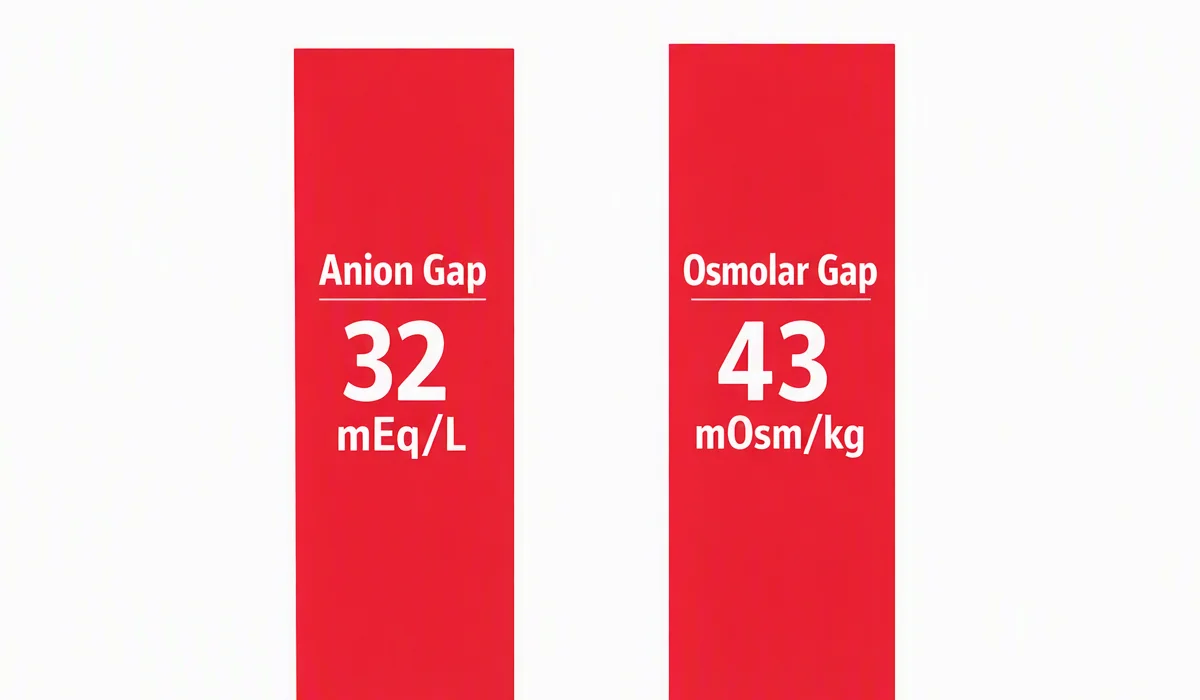
- Albumin: As albumin is a key unmeasured anion, lower levels can decrease the measured gap.
- Lactate: Elevated lactate can raise the gap because it adds unmeasured anions.
- Lab variation: Different instruments and methods may yield slightly different values.
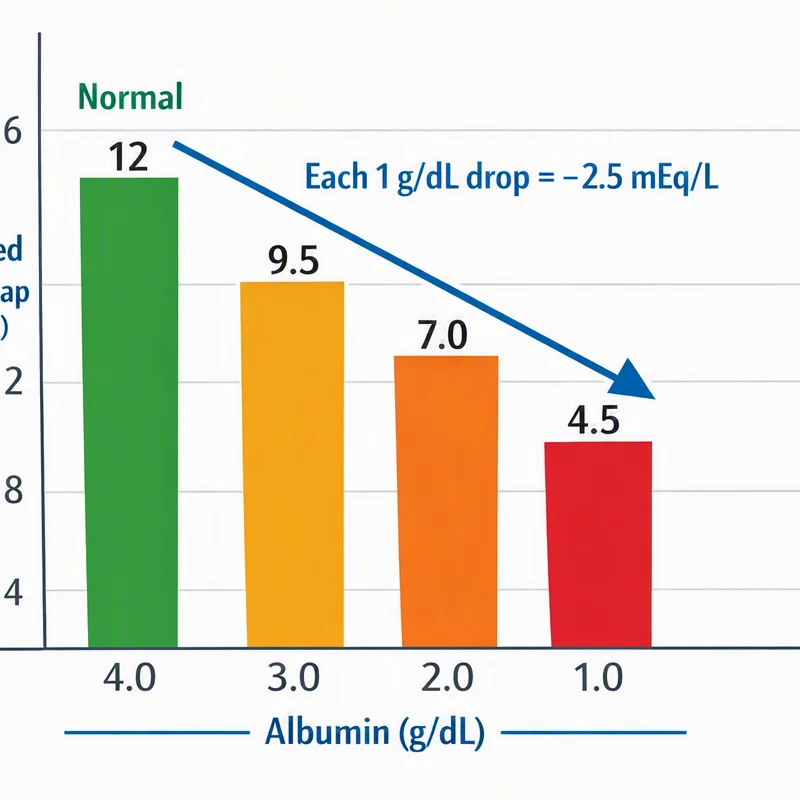
Albumin is particularly important because it is one of the major contributors to the anion gap. When albumin is low, the normal anion gap may appear falsely reassuring. In those cases, an albumin correction or albumin adjustment may be needed to calculate a more accurate corrected anion gap.
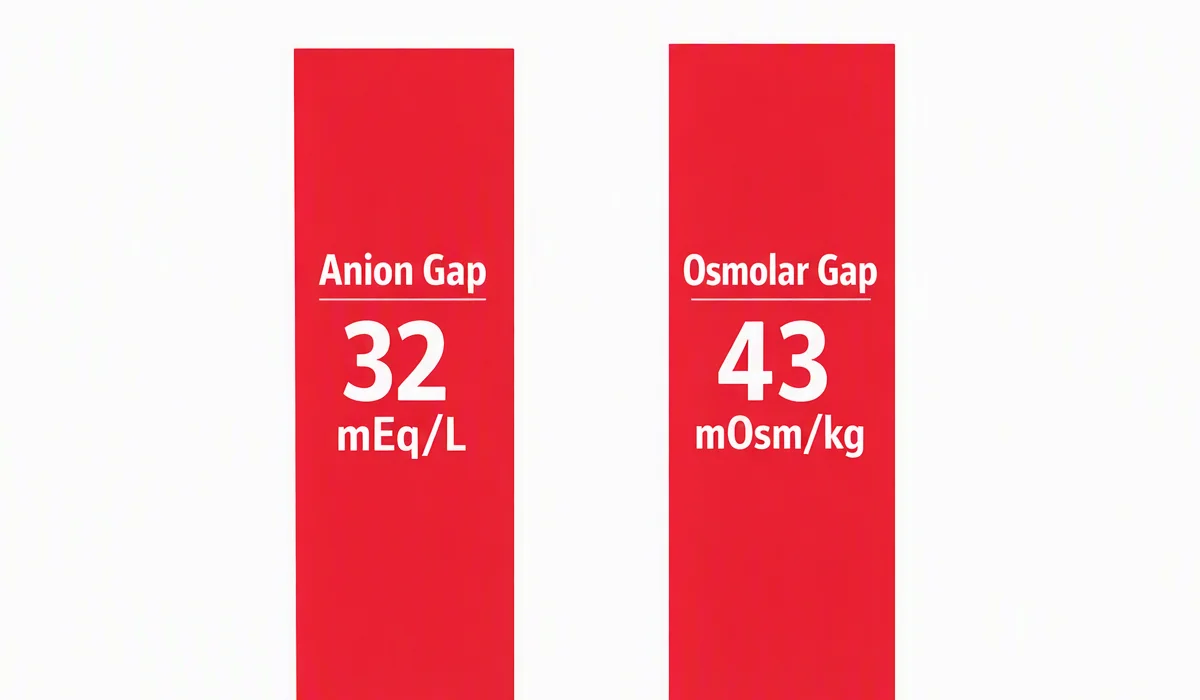
This is important because a patient can have a serious acid-base problem even if the raw number seems normal. For that reason, interpreting the value without checking albumin can lead to missed findings. Similarly, high lactate can shift the result upward even before other abnormalities are obvious.
Elevated Anion Gap: Frequent Causes
A high anion gap usually suggests the existence of unaccounted-for acids in the blood. The most common clinical concern is acid-base disturbance, where acid builds up or bicarbonate is depleted in a way that increases the calculated gap.
These causes include:
- Lactic acidosis, often associated with reduced tissue oxygen delivery, severe illness, or reduced lactate clearance.
- Acid buildup from ketones, which can occur when ketone bodies accumulate during insulin deficiency, starvation, or other metabolic stress.
- Impaired kidney function, where reduced acid excretion causes acids to persist.
- Poisoning, including certain substances that generate unmeasured acids or interfere with normal metabolism.
This matters because they suggest different treatment pathways. For example, lactate acidosis indicates a search for tissue hypoperfusion or severe infection, while ketone-related acidosis points toward abnormal fat metabolism and requires a different management approach. Renal failure may cause acid retention over time, and toxin exposure can cause a dangerous metabolic picture that needs urgent assessment.
A high value is not a diagnosis by itself. It is a clue that should be interpreted alongside symptoms, history, and the rest of the blood test results. In many cases, it prompts more testing to identify the underlying https://jsbin.com/sikekupugu cause and to determine how severe the metabolic disturbance is.
Low Anion Gap: Common Causes
A low anion gap is not as common than a high one, but it can still be important clinically. One of the leading explanations is hypoalbuminemia, because albumin is a negatively charged protein that contributes to the normal gap. When albumin falls, the calculated value can fall with it.
Other frequent causes include:
- Paraproteinemia, where abnormal proteins in the blood alter the balance of measured and unmeasured ions.
- Lab error, including specimen issues or measurement problems that distort the reported electrolytes.
Hypoalbuminemia is especially relevant because it can obscure a serious condition if the result is interpreted without an albumin correction. In some patients, the corrected value may reveal a more significant disorder than the unadjusted number suggests. This is why a corrected anion gap can be more useful than the raw calculation alone.
Paraproteinemia should be considered when abnormal proteins are present, particularly if other findings do not match the apparent result. And because lab error is always possible, an unexpected low result should be reviewed carefully before drawing conclusions. Repeating the test or checking the full electrolyte panel may help confirm whether the number is real.
Clinical Application of the Anion Gap in Acid-Base Disorders
The anion gap is especially useful when used as part of a more comprehensive assessment of acid-base disorders. It helps separate different types of metabolic acidosis and aids the work of pattern recognition when reviewing a blood test, electrolyte panel, and serum chemistry results in combination.
In practice, the anion gap helps clarify questions such as:
- Is the acidosis related to accumulation of unmeasured acids?
- Does the pattern suggest bicarbonate loss instead?
- Is the gap elevated enough to prompt looking for lactate, ketones, toxins, or renal dysfunction?
Another important concept is the delta gap, which contrasts the change in anion gap with the change in bicarbonate. This can help detect mixed disorders, where more than one metabolic process is happening at the same time. That is useful because a patient may have a high anion gap acidosis and another acid-base problem at once.
A blood gas is often interpreted alongside the anion gap to give a fuller picture of acid-base status. The blood gas shows pH and respiratory compensation, while the anion gap helps reveal the underlying metabolic component. Together, they improve clinical significance and help with cause assessment.
This is why the anion gap remains a useful diagnostic tool: it turns a simple lab calculation into a helpful guide for evaluating complex metabolic disturbances.
Interpreting Outputs Safely
Accurate medical interpretation requires something beyond reviewing one number. The anion gap should be reviewed in the context of clinical symptoms, the full electrolyte panel, medication history, kidney function, and any other signs of illness. A result that looks abnormal may be explained by timing, fluid status, protein changes, or measurement differences.
Safe interpretation involves a few steps:
- Verify the values used in the calculation.
- Check whether the lab’s reference range differs from other sources.
- Evaluate albumin and consider albumin adjustment if needed.
- Check for signs of electrolyte imbalance or metabolic acidosis.
- Look for clinical clues that favor or oppose a suspected cause.
If the result suggests a serious issue, a medical evaluation is necessary. This is especially true when symptoms such as confusion, rapid breathing, dehydration, vomiting, or severe weakness are present. The anion gap is valuable, but it does not replace a full assessment of the person and the illness.
In practical terms, the number should guide the next step, not serve as the final conclusion. Pairing the calculator result with clinical context improves accuracy and reduces the risk of missing an important problem.
Frequently Asked Questions
Why use the anion gap calculator?
The anion gap calculator is used to calculate the anion gap from common blood test values, usually sodium, chloride, and bicarbonate. It helps with interpretation of acid-base balance and can point toward a metabolic disturbance such as metabolic acidosis.
How do you calculate the anion gap?
The most common anion gap equation is: sodium minus the sum of chloride and bicarbonate. In short, the anion gap formula is sodium − (chloride + bicarbonate). Some versions may include potassium, but the simpler formula is widely used.
What is a healthy anion gap result?
The expected range varies by the lab and method used, so the reference range on the results should be checked before anything else. A result in the normal anion gap range generally implies no major build-up of hidden acids, but low albumin and testing variation can change the value.
What causes a high anion gap?
A elevated anion gap is often the result of acid-base imbalance from problems including lactate buildup, ketone buildup, kidney failure, or poisoning. These causes introduce unmeasured acids to the blood and raise the calculated value.
Might a low anion gap signal a medical problem?
Yes, it can. A decreased anion gap can be associated with low albumin, paraproteinemia, or measurement error. It may also indicate other alterations in electrolytes or proteins, so it should be evaluated in clinical context rather than dismissed.